India
India Australia
 Canada
 UAE
UAE UK
UK USA
USA India
India






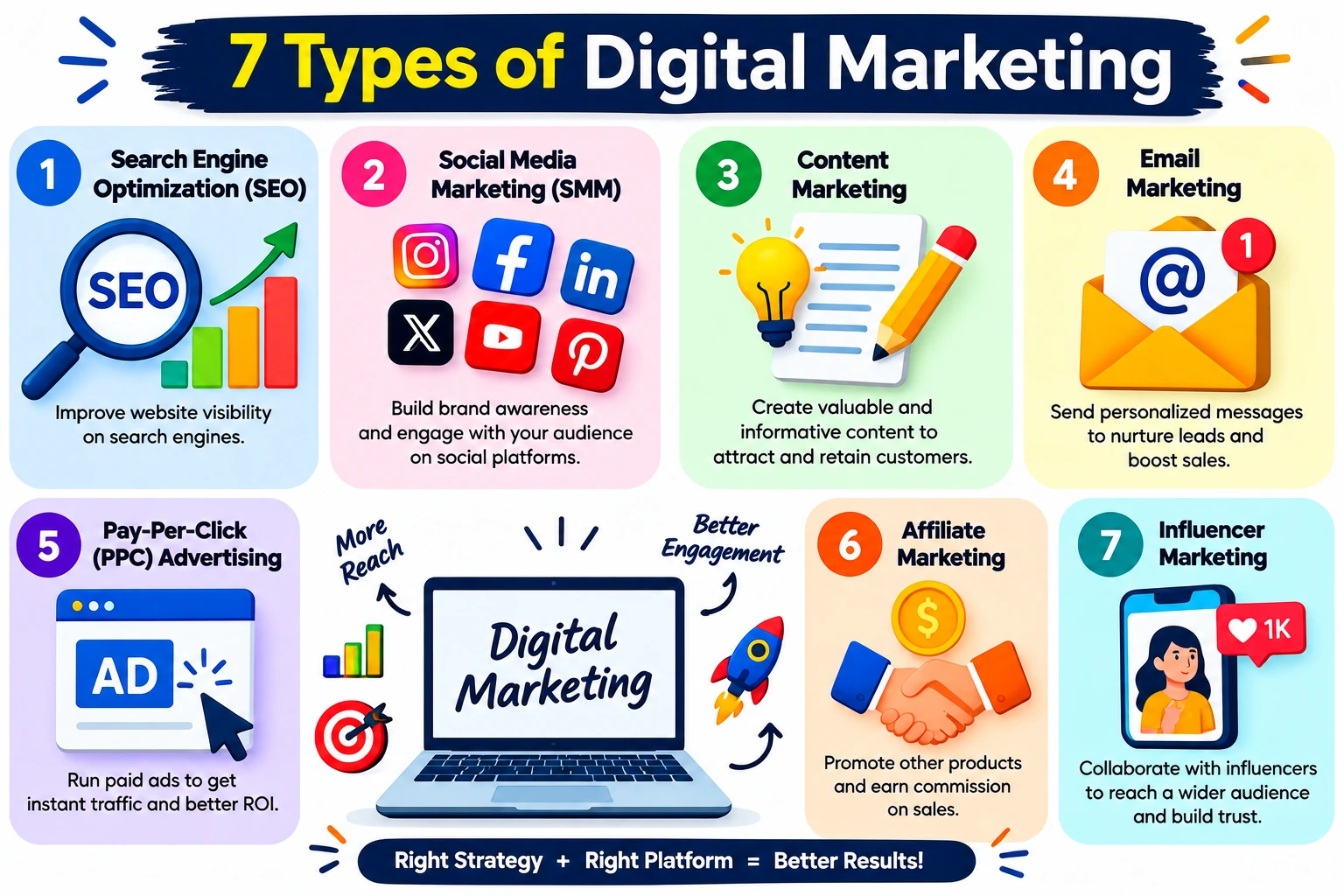
What Are the 7 Types of Digital Marketing? A Practical Guide for Business Owners
The 7 main types of digital marketing are: search engine optimization (SEO), content marketing, social media marketing, pay-per-click (PPC) advertising, email marketing, affiliate marketing, and influencer marketing. Each one uses a different online channel to reach customers, and the best results usually come from combining two or three of them rather than relying on just one.
If you have ever searched for ways to grow your business online, you have probably seen terms like SEO, PPC, funnels, and retargeting thrown around as if everyone already understands them. Most business owners don't, and that is perfectly fine. At Tantrash Technologies, we meet owners every week who know they need "digital marketing" but are not sure what that actually includes, where to start, or how to tell whether it is working.
This guide explains each of the seven types in plain language: what it is, how it works, what it costs in terms of time and effort, who it suits, and the mistakes we see most often. By the end, you will know which channels deserve your attention first.
What Is Digital Marketing, in Simple Words?
Digital marketing is any marketing activity that reaches people through the internet or a digital device. That includes Google search results, Instagram and Facebook, YouTube, email inboxes, WhatsApp, websites, and mobile apps.
Traditional marketing, such as hoardings, pamphlets, and newspaper ads, sends one message to everyone and hopes the right people notice. Digital marketing lets you choose who sees your message (by city, age, interest, or search behavior), measure exactly how many people responded, and adjust within days instead of months. That control is why even small local businesses now compete with much larger brands online.
1. Search Engine Optimization (SEO)
What it is: SEO is the practice of improving your website so that it appears higher in unpaid (organic) search results on Google and other search engines. When someone searches "best dentist near me" or "digital marketing agency in Lucknow," SEO determines which businesses show up first.
How it works: Search engines try to show the most helpful, trustworthy page for every query. SEO helps your site earn that position through three things:
- On-page SEO: clear titles, headings, useful content, fast loading, and a mobile-friendly design.
- Off-page SEO: backlinks and mentions from other trusted websites, which signal authority.
- Technical SEO: clean site structure, proper indexing, secure connection (HTTPS), and no broken pages.
There is also a local side to SEO. If you serve customers in one city, your Google Business Profile, local reviews, and consistent business details across the web matter as much as your website.
Best for: businesses that want steady, long-term enquiries without paying for every click. SEO is slower than ads, usually taking a few months to show real movement, but the traffic compounds over time and does not switch off the day you stop spending.
Common mistake: chasing keywords without thinking about what the visitor wants. A page that ranks but does not answer the visitor's question will not convert. If you want professional help building this foundation, our team handles it as part of our digital marketing services in Lucknow.
2. Content Marketing
What it is: Content marketing means creating and sharing useful material, such as blogs, videos, guides, case studies, infographics, and podcasts, to attract and educate your ideal customers. The goal is not to sell in every paragraph. The goal is to become the source people trust before they are ready to buy.
How it works: People go through stages before purchasing. First they notice a problem, then they research solutions, then they compare providers. Content marketing places a helpful answer at each of those stages. A blog that explains "how to choose a POS system" brings in someone at the research stage. A case study showing real results helps someone who is comparing options.
Why it matters today: Content is also what AI-powered search tools draw from. When Google's AI Overviews or tools like ChatGPT answer a question, they pull from pages that explain the topic clearly and credibly. Businesses that publish genuinely helpful content are far more likely to be referenced.
Best for: almost every business, especially those with a considered purchase, where customers research before they buy.
Common mistake: publishing thin, generic articles that repeat what ten other websites already say. One deeply useful article is worth more than ten shallow ones.
3. Social Media Marketing (SMM)
What it is: Social media marketing uses platforms like Instagram, Facebook, LinkedIn, YouTube, and X to build awareness, engage your audience, and generate leads. It includes both organic posting and paid promotion on these platforms.
How it works: Each platform has a different audience and purpose. LinkedIn suits B2B services and professional networking. Instagram and Facebook work well for retail, food, fashion, education, and local services. YouTube is strong for demonstrations, tutorials, and long-term discoverability. The skill is in choosing the one or two platforms where your customers actually spend time, rather than being present everywhere.
Best for: brands that want to build community, showcase products visually, and stay in front of customers regularly. It is also useful as a trust signal, since many buyers check a business's social profiles before contacting them.
Common mistake: posting inconsistently or only posting promotional offers. Social media rewards businesses that show their work, answer questions, and talk like people instead of advertisements.
4. Pay-Per-Click (PPC) Advertising
What it is: PPC is a paid model where you place ads and pay only when someone clicks on them. The most common forms are Google Ads (search, display, shopping, and YouTube) and paid campaigns on Meta platforms like Facebook and Instagram.
How it works: In search ads, you bid on keywords. When someone searches that phrase, your ad can appear above the organic results. Google decides which ads to show using your bid, the quality of your ad, and how relevant your landing page is to the search. A well-built campaign can bring qualified enquiries within days of launching.
Best for: businesses that need quick results, are launching a new product or service, or want to test which offers and messages work before investing in long-term channels. It also complements SEO well: ads bring immediate traffic while organic rankings build up in the background.
Common mistake: sending all clicks to the homepage. Ads should lead to a focused landing page with one clear action. Poor targeting and weak landing pages are the biggest reasons businesses feel PPC "doesn't work" and burn through budget.
5. Email Marketing
What it is: Email marketing means sending messages directly to people who have chosen to hear from you, such as newsletters, offers, product updates, abandoned-cart reminders, and follow-up sequences.
How it works: You build a list through your website, events, or purchases, then send relevant messages. Unlike social media, where an algorithm decides who sees your post, an email goes straight to the inbox. The best email marketing is segmented, meaning different groups get different messages depending on their interests or past behavior.
Best for: keeping existing customers engaged, encouraging repeat purchases, and nurturing leads who are not ready to buy yet. It is one of the most cost-efficient channels once the list exists, because you own the audience.
Common mistake: buying email lists. It damages your sender reputation, lowers deliverability, and can create legal and trust problems. Build the list the slow way, with people who actually want to hear from you.
6. Affiliate Marketing
What it is: Affiliate marketing is a performance-based model where partners (bloggers, reviewers, comparison sites, or other businesses) promote your product and earn a commission for each sale or lead they bring.
How it works: Each affiliate gets a unique tracking link. When a customer clicks that link and completes the agreed action, the affiliate is paid. You only pay for results, which keeps the risk low.
Best for: e-commerce brands, software companies, online courses, and any business with a clear product and enough margin to share a commission. It needs tracking systems and good partner management, so it suits businesses that already have a working sales process.
Common mistake: setting commissions too low to attract quality partners, or not checking how affiliates promote the brand. Always review partners so your reputation stays protected.
7. Influencer Marketing
What it is: Influencer marketing means partnering with people who have a trusted following, from large creators to local micro-influencers, so they introduce your brand to their audience.
How it works: People trust recommendations from voices they follow more than they trust brand advertising. A food blogger visiting your restaurant, a fitness coach reviewing your products, or a local creator sharing your service can put you in front of an audience that already listens to them.
Best for: consumer brands, restaurants, fashion, beauty, travel, education, and local businesses that want to build awareness in a specific city or community. Smaller influencers with a focused local audience often deliver better engagement than celebrities, at a much lower cost.
Common mistake: choosing influencers by follower count alone. Engagement, audience location, and genuine fit with your brand matter far more than the number on their profile.
Other Channels Worth Knowing
Some lists include additional types, and you may see these mentioned too:
- Video marketing: YouTube, Reels, and Shorts, often treated as part of content or social media marketing.
- Mobile and WhatsApp marketing: reaching customers through SMS, app notifications, and WhatsApp Business.
- Marketing automation: using software to trigger the right message at the right moment without manual effort.
- Online reputation management: managing reviews and brand mentions across the web.
These usually support one of the seven main types rather than replacing them.
How to Choose the Right Type for Your Business
You do not need all seven. Here is a simple way to decide where to begin:
- Start with your goal. Need enquiries this month? PPC is the fastest route. Want steady enquiries over the next year? Invest in SEO and content. Want loyalty and repeat sales? Focus on email.
- Look at where your customers are. A B2B software company will find more value on LinkedIn than on Instagram. A bakery will do the opposite.
- Be honest about your budget and time. Some channels cost money, others cost consistent effort. Pick what you can sustain for at least six months.
- Combine two or three. A strong starting mix for many local businesses is SEO plus content for long-term growth, PPC for immediate leads, and social media for trust.
- Measure and adjust. Track enquiries, calls, and sales, not just likes and impressions. Drop what does not work and put more into what does.
If you are not sure which mix fits your business, a conversation with a specialist can save months of trial and error. Our team at Tantrash Technologies works with businesses across industries, and you can see how we approach this on our digital marketing agency in Lucknow page.
Final Thoughts
The seven types of digital marketing, SEO, content marketing, social media marketing, PPC, email marketing, affiliate marketing, and influencer marketing, are not competing options. They are tools, and each does a different job. SEO and content build lasting visibility. PPC delivers speed. Social media and influencers build trust. Email keeps customers coming back. Affiliates add performance-based reach.
The businesses that win online are rarely the ones using every channel. They are the ones that choose the right few, execute them consistently, and measure honestly. Start small, stay consistent, and let the data guide your next step.