India
 Australia
 Canada
 UAE
 UK
 USA
 India







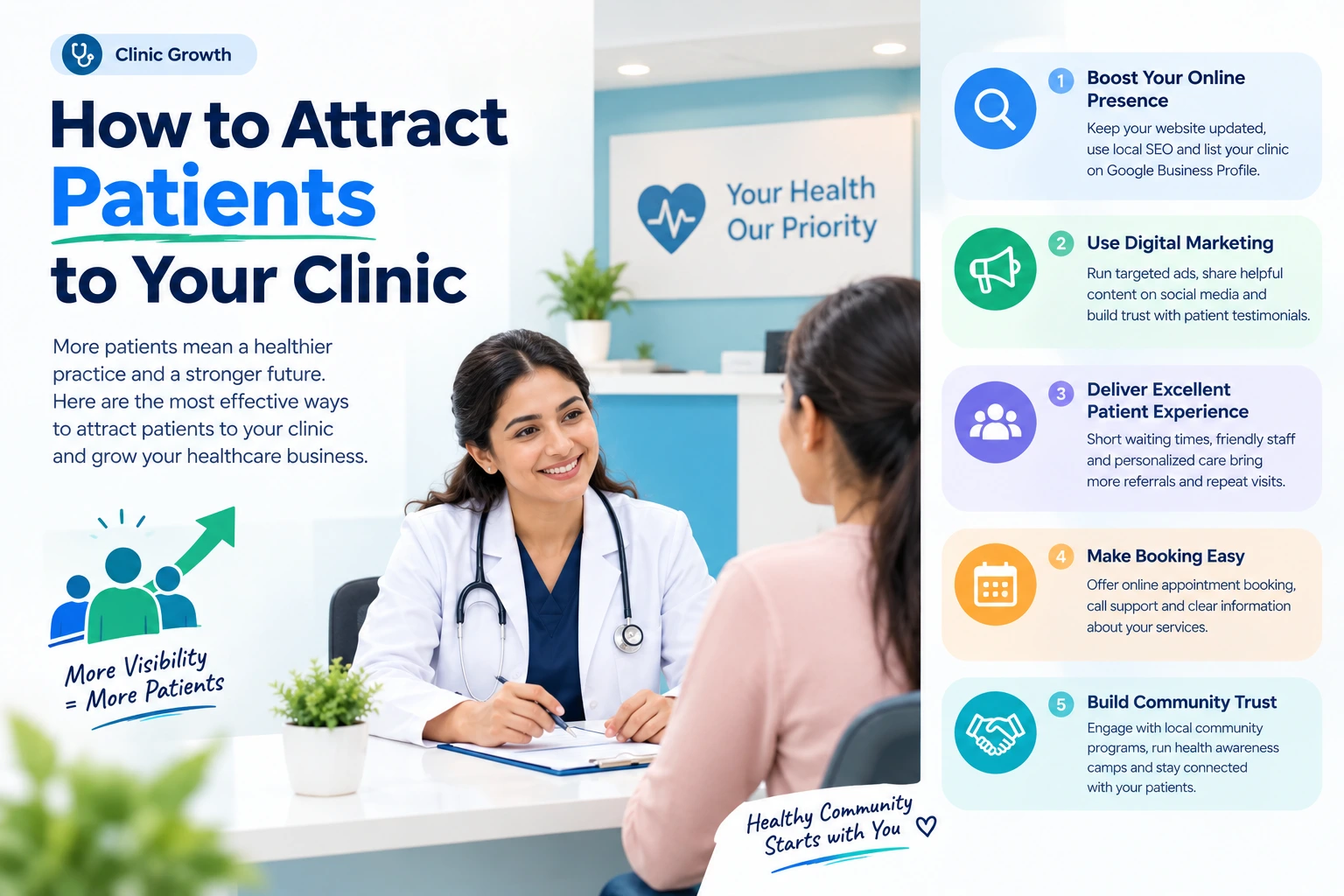
How to attract patients to your clinic
To attract patients to your clinic, make it easy to find, easy to trust and easy to book. That means an accurate Google Business Profile, a clear website with your credentials and services, genuinely helpful health education, a smooth appointment process, and a good in-clinic experience that earns real word of mouth. And in India today, all of it has to stay within the NMC's ethical advertising rules.
That last part matters more than ever. On 6 October 2026, the National Medical Commission issued its Guidelines on Ethical Advertising and Public Communication for hospitals and registered medical practitioners, and they came into effect immediately. This guide shows you how to grow your patient base using methods that work and that respect these rules.
First, Understand What the New NMC Guidelines Cover
The guidelines apply to far more than newspaper ads. They cover websites, blogs, social media, messaging platforms such as WhatsApp and Telegram, podcasts and influencer marketing. AI-generated promotional content is also included in the definition of advertising.
In simple terms, the NMC is not against doctors being visible online. It is against promotion that misleads patients or solicits them. Factual information and health education are treated very differently from sales-style marketing.
| Generally acceptable | Restricted or prohibited (as reported) |
|---|---|
| Factual clinic information: name, qualifications, specialty, registration details, timings, location | Guaranteed cure or exaggerated outcome claims |
| Evidence-based health awareness content without promotional intent | Requesting or sharing patient testimonials, reviews or endorsements for promotion on social media |
| A hospital or clinic website with a doctor directory that serves a patient-information purpose | Using celebrities, influencers, patients or staff to promote professional services |
| Disclosing name, qualifications and registration number on electronic media posts | Before-and-after photographs used to suggest superior results, even with consent |
| Clear, honest appointment and contact details | Paid rankings, AI-generated testimonials and doctor photographs used for self-promotion |
Rules like these can be detailed, and how they apply to your specific situation can vary. Read the official NMC document, and consult a qualified legal or compliance adviser before launching any campaign. This article is general information, not legal advice.
1. Build a Website That Informs Patients First
Your website is your most important and most controllable asset. Most patients check it, or at least Google your clinic name, before they call.
- Show the facts clearly: doctor names, recognised qualifications, specialty, registration details, clinic address, timings and contact numbers.
- Describe services in plain language: what conditions you treat, what a first visit involves, and what patients should bring.
- Make it fast and mobile-friendly: most patients search on their phones, often when they are worried and in a hurry.
- Put the appointment option up front: a call button, a booking form and a map link on every page.
- Avoid sales language: skip phrases like "best doctor", "100% cure" or "guaranteed results". They damage trust and can breach the guidelines.
2. Get Local Search Right
Most patients search for care close to home, using queries like "skin doctor near me" or "dental clinic in Lucknow". Local search is where clinics win or lose new patients.
- Claim and complete your Google Business Profile: correct name, address, phone number, timings, specialties and services.
- Choose accurate categories and add real photos of your clinic, reception and waiting area.
- Keep details consistent across your website, directories and maps, because mismatched information hurts local rankings.
- Respond to patient queries politely and factually, without sharing private health details in public replies.
On reviews, be careful. Patients are free to write their own feedback, but the new guidelines restrict doctors from requesting or sharing patient testimonials and reviews for promotion on social media. Do not buy, incentivise or republish reviews as marketing material, and check your approach with a compliance adviser.
3. Publish Helpful Health Education
This is the safest and most powerful way to build trust. When someone searches "how long does a root canal take" or "what causes frequent headaches", the clinic that answers clearly becomes familiar before the patient ever walks in.
- Write about symptoms, causes, prevention, when to see a doctor, and what to expect from common procedures.
- Keep information accurate, balanced and evidence-based, and avoid promotional pushes inside educational content.
- Show who wrote or reviewed it, with name, qualifications and registration number, as the guidelines expect on electronic media posts.
- Answer real questions patients ask you every day. Those are the questions Google and AI search tools also see most.
This content also helps your visibility in AI answers and search snippets, because clear, honest and well-structured explanations are exactly what those systems look for.
4. Make Booking Effortless
Many clinics lose patients not because of poor care but because of friction. A missed call, an unanswered message or a confusing form is enough to send someone to the next clinic.
- Answer calls and messages quickly, and set clear response times.
- Offer more than one way to book: phone, website form or WhatsApp for appointment requests.
- Send appointment confirmations and reminders. These are patient service messages, not promotions.
- Avoid mass promotional broadcasts on messaging apps, since these platforms are covered by the guidelines.
5. Deliver an Experience Worth Talking About
The strongest source of new patients is still a satisfied existing patient. Referrals come naturally when people feel respected and understood.
- Keep waiting times reasonable and tell patients when there is a delay.
- Explain diagnosis and treatment in simple language.
- Follow up after procedures and be available for questions.
- Train front-desk staff to be warm, patient and clear on fees and processes.
Do not ask patients or staff to publicly promote your services. Let the experience speak for itself.
6. Measure What Is Actually Bringing Patients In
If you cannot see which efforts bring in appointments, you cannot improve them. Track a few simple numbers each month:
- Website visits and where they came from (Google Analytics)
- Search queries and pages that attract clicks (Google Search Console)
- Calls, direction requests and bookings from your Google Business Profile
- New patients and how they heard about you, asked politely at registration
- Cost per appointment if you run any paid campaigns
Common Mistakes Clinics Make
- Making outcome promises. Medicine does not offer guarantees, and the guidelines target misleading claims directly.
- Posting before-and-after photos or patient success stories to attract new patients.
- Using AI-generated reviews, testimonials or fake patient stories.
- Paying for "top doctor" rankings or listings that push you above others.
- Letting an agency run wild. The guidelines cover marketing done through agencies too, so every page, post and ad still has to comply.
- Ignoring the basics. An out-of-date phone number on Google can cost more patients than any ad budget saves.
Reports on the guidelines indicate that violations can lead to disciplinary action, which in serious cases may include suspension. That makes a compliance-first approach not just ethical but practical.
A Simple 30-Day Plan to Get Started
- Week 1: Audit your website and Google Business Profile for accuracy, credentials and any claims that could be misleading. Remove anything risky.
- Week 2: Fix the basics: mobile speed, clear service pages, visible contact and booking options.
- Week 3: Publish your first two or three educational articles answering common patient questions, with proper author details.
- Week 4: Set up tracking, review your appointment process, and plan a monthly content and review routine.
How Tantrash Technologies Supports Clinics
Growing a clinic online is a balance between visibility and responsibility. As a healthcare digital marketing company in Lucknow, Tantrash Technologies focuses on the parts that stay on the right side of professional ethics: accurate local listings, patient-friendly websites, educational content and measurable appointment growth. We keep every page and post aligned with the current guidelines, so doctors can focus on patients, not on compliance worries.
Final Thoughts
Attracting patients is not about louder advertising. It is about being easy to find, honest in what you say, helpful before the first visit and reliable after it. Under the new NMC framework, that is also exactly what is expected of you.
If you want a growth plan built around these principles, speak with a healthcare digital marketing company in Lucknow that understands both marketing and medical ethics.
Frequently Asked Questions
1. How can a clinic attract more patients online?
Keep your website and Google Business Profile accurate, publish helpful health education, make booking easy and deliver a good patient experience. Together these build trust and local visibility without making risky claims.
2. Can doctors advertise in India?
Doctors can share factual information and health education, but promotional advertising and patient solicitation are restricted under the NMC's ethical advertising guidelines issued on 6 October 2026. Always check the official guidelines for your situation.
3. Can I use patient reviews and testimonials on social media?
The guidelines bar doctors from requesting or sharing patient testimonials, reviews or endorsements for promotion on social media. Avoid republishing them as marketing and take advice from a compliance professional.
4. Can I post before-and-after photos?
Reports on the guidelines say before-and-after photographs cannot be used to suggest superior clinical results, even when the patient consents. It is safer to avoid them in promotional content.
5. Is health education content on social media allowed?
Yes. Factual, evidence-based awareness content without promotional intent is acceptable, and posts should carry your name, qualifications and registration number.
6. Can a clinic work with a digital marketing agency?
Yes, but the rules still apply to everything the agency creates for you. Choose a partner that understands NMC guidelines and reviews every page, post and ad for compliance.